A 1 percent change in your mortgage rate can shift your Yorktown budget by roughly 10 percent. In a North Arlington market where many homes sit well above national price points, that swing can move you between condo buildings or from a smaller to a larger single-family home. If you are trying to time a purchase or refine your search criteria, understanding how rates flow through to real buying power is essential. Below you will find simple rules, Yorktown-focused examples, and practical tactics to keep you competitive. Let’s dive in.
What changes when rates move
Interest rates directly change how much loan you can support for a given monthly principal-and-interest (P&I) budget. As rates rise, the same payment buys a smaller loan. As rates fall, it buys a larger loan.
Here is a quick rule of thumb for a 30-year fixed loan:
- At 4.5 percent, each $1,000 of monthly P&I supports about $197,300 of loan.
- At 5.5 percent, $1,000 supports about $176,200.
- At 6.5 percent, $1,000 supports about $158,200.
Put simply, a 1 percentage point increase in rate reduces loan purchasing power by roughly 10 to 11 percent. A 2 point increase reduces it by around 18 to 20 percent.
Yorktown market context
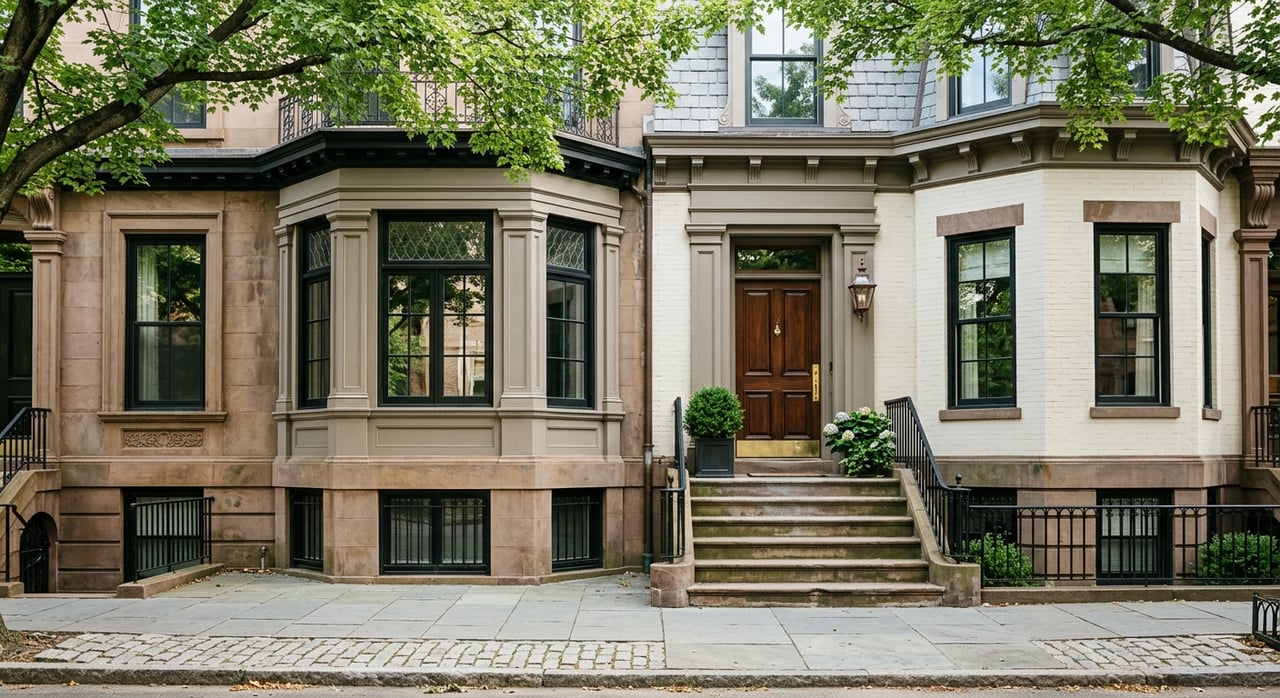
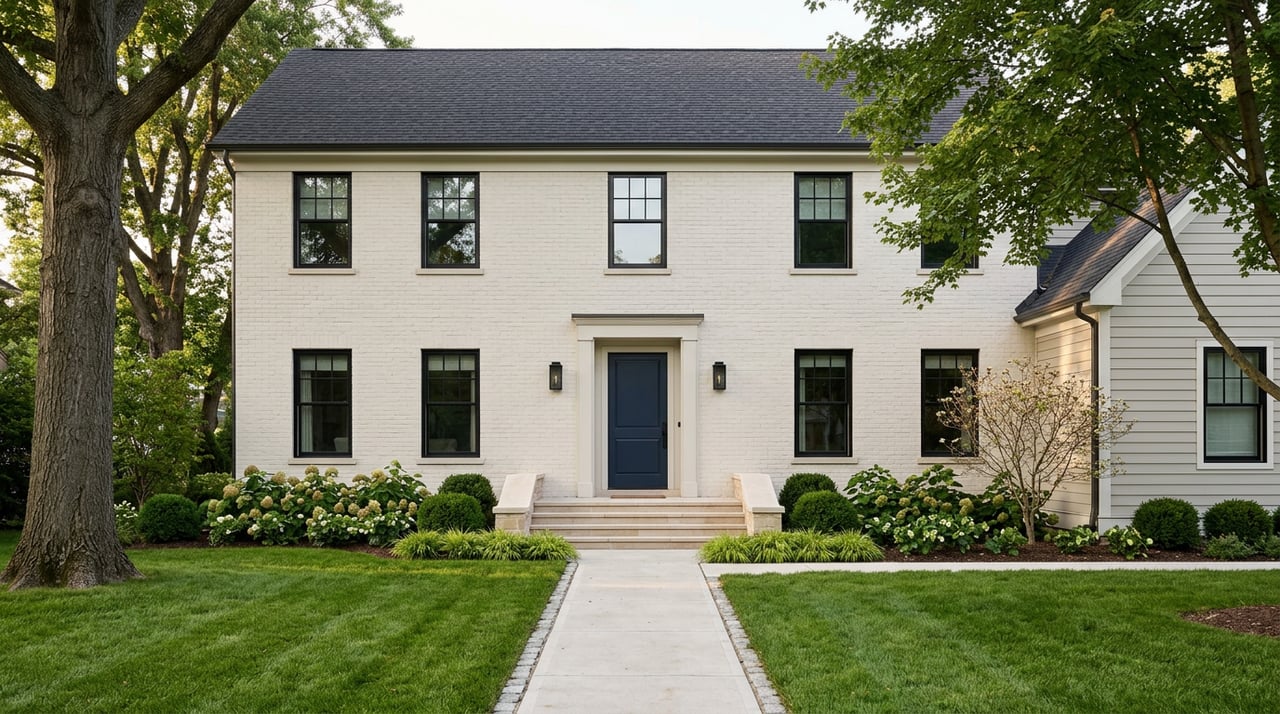
Yorktown is a North Arlington neighborhood in Arlington County with a mix of mid-century single-family homes, larger renovated houses at higher price points, and a smaller supply of condos and townhomes. That mix creates two common buyer profiles:
- First-time buyers often enter through condos or townhomes, with purchase prices ranging from the low-to-mid hundreds of thousands up to roughly the $500,000 to $700,000 range depending on the home and the market cycle.
- Move-up buyers targeting detached single-family homes in North Arlington typically work in the $700,000 to $1.5 million range, with upper-tier homes exceeding $1.5 million.
Because list prices are higher than national averages, small rate moves can meaningfully change which Yorktown homes align with your budget.
Assumptions for the examples
To keep the math clear, the scenarios below use these assumptions:
- Loan term: 30-year fixed.
- Sample interest rates: 4.5 percent, 5.5 percent, 6.5 percent.
- P&I multipliers: $1,000/month supports roughly $197,300 at 4.5 percent, $176,200 at 5.5 percent, and $158,200 at 6.5 percent.
- Down payments: 3 percent, 5 percent, 10 percent, and 20 percent.
- Later sections add estimates for taxes, homeowners insurance, private mortgage insurance (PMI), and HOA.
Note: These are illustrative. Always check current mortgage quotes and Arlington County’s current tax rate before you lock a budget.
First-time buyer snapshot
The table below shows how a first-time buyer with a target P&I budget around $2,500/month could translate that into purchase price at different rates and down payments. Loan amounts reflect the P&I budget using the multipliers above, then we convert to purchase price.
| Rate |
Loan for $2,500 P&I |
3% down price |
5% down price |
10% down price |
20% down price |
| 4.5% |
$493,000 |
$508,000 |
$519,000 |
$548,000 |
$616,000 |
| 5.5% |
$441,000 |
$455,000 |
$464,000 |
$490,000 |
$551,000 |
| 6.5% |
$396,000 |
$408,000 |
$417,000 |
$440,000 |
$495,000 |
Takeaway: At this budget level, a 1 point rate move can change your reachable price by tens of thousands of dollars, especially with lower down payments where PMI also comes into play.
Move-up buyer snapshot
For a move-up buyer targeting larger single-family homes with a P&I budget around $4,500/month, the same rate swing translates to higher absolute dollar changes.
| Rate |
Loan for $4,500 P&I |
3% down price |
5% down price |
10% down price |
20% down price |
| 4.5% |
$888,000 |
$915,000 |
$935,000 |
$987,000 |
$1,110,000 |
| 5.5% |
$793,000 |
$818,000 |
$835,000 |
$881,000 |
$991,000 |
| 6.5% |
$712,000 |
$734,000 |
$749,000 |
$791,000 |
$890,000 |
Takeaway: In Yorktown’s single-family segment, rate changes can shift you between tiers of size, lot, or level of renovation.
Quick sensitivity example
Here is a fast way to see the effect if you are eyeing a midrange budget:
- If your desired P&I is $3,000/month, your approximate loan capacity is about $592,000 at 4.5 percent, $528,600 at 5.5 percent, and $474,600 at 6.5 percent. That is roughly a 20 percent difference across a 2 point rate swing before considering taxes, insurance, PMI, or HOA.
Total monthly payment reality check
P&I is only part of the picture. Property taxes, homeowners insurance, PMI for down payments below 20 percent, and HOA fees for many condos and townhomes can add several hundred dollars per month.
Here is how to estimate those components for planning:
- Property taxes: As a placeholder, use 1.0 percent of the purchase price per year divided by 12.
- Homeowners insurance: Use 0.3 percent of the purchase price per year divided by 12.
- PMI: If you put less than 20 percent down on a conventional loan, estimate about 0.6 percent of the loan amount per year divided by 12. PMI varies by credit and loan profile.
- HOA: If you are buying a condo or townhome, add the monthly HOA from the listing. In North Arlington, this can vary widely.
Example A: Yorktown condo purchase
- Price: $500,000. Down payment: 5 percent. Rate: 5.5 percent. Loan: $475,000.
- Estimated P&I: about $2,698/month.
- Estimated taxes: about $417/month using the 1.0 percent placeholder.
- Estimated homeowners insurance: about $125/month.
- Estimated PMI: about $238/month.
- Estimated HOA: example $300/month.
- Estimated total monthly: about $3,778.
Example B: Yorktown single-family purchase
- Price: $1,100,000. Down payment: 20 percent. Rate: 6.5 percent. Loan: $880,000.
- Estimated P&I: about $5,563/month.
- Estimated taxes: about $917/month.
- Estimated homeowners insurance: about $275/month.
- PMI: $0 with 20 percent down.
- HOA: often none for single-family, though some communities have a small fee. Use the listing amount if applicable.
- Estimated total monthly: about $6,755.
Key message: Taxes, insurance, PMI, and HOA can increase your monthly obligation by hundreds to more than a thousand dollars per month. That is why P&I-only comparisons understate how rate changes really affect your budget.
Lender rules that shape buying power
Your qualifying amount also depends on underwriting guidelines, not just math:
- Debt-to-income ratios: Many lenders look for housing costs, or PITI, around 28 to 31 percent of gross monthly income. Total debts are often capped near 43 percent, with some programs allowing higher ratios for strong files.
- Down payment and credit: Conventional loans can go as low as 3 percent down for qualified borrowers with PMI below 20 percent down. FHA allows 3.5 percent down for many borrowers, with its own mortgage insurance rules.
- Points and temporary buydowns: Paying discount points at closing can reduce your rate and monthly payment. This increases effective purchasing power but requires upfront cash. Always compare the break-even.
Actual qualification depends on your credit, income, debts, reserves, and property type.
Tactics to protect your buying power
- Right-size your down payment. Increasing from 5 percent to 10 percent can offset part of a rate increase and reduce PMI.
- Consider points. If you plan to hold the loan long enough, buying down the rate can lower monthly costs and expand your target list.
- Optimize total costs. Target homes with lower HOA fees if you are rate sensitive, or focus on properties where insurance is likely to be lower based on coverage needs.
- Improve your profile. A higher credit score can reduce your rate and PMI cost. Paying down other debts can also improve your qualifying ratios.
- Keep timing flexible. Aligning your closing with favorable rate windows or builder or seller incentives can meaningfully improve the net payment.
How to use these numbers in Yorktown
- Define your P&I target first. Pair it with the multiplier for a quick loan estimate.
- Layer in taxes, insurance, PMI, and HOA. Use placeholders now, then refine with live quotes during pre-approval.
- Map to Yorktown inventory. If rates rise, adjust by price band or home type so you keep options in your preferred area.
- Get pre-approved early. A live lender quote will surface your exact DTI limits, PMI, and rate options, including points or temporary buydowns.
- Recheck before offering. Small rate moves between showing and offer can change monthly costs and your approval letter.
If you want a personalized, data-driven plan for Yorktown and neighboring North Arlington micro-markets, reach out. As a local advisor who pairs neighborhood insight with clear analytics, I will help you calibrate your budget to the current market and negotiate with confidence. Contact Gabrielle Witkin to Schedule a Free Consultation.
FAQs
How does a 1 percent rate change affect my Arlington budget?
- In the 4 to 7 percent range, each 1 percentage point rate increase reduces the loan you can support for the same P&I by roughly 10 to 11 percent, with the reverse true when rates fall.
What extra monthly costs should Yorktown condo buyers include?
- Add estimates for property taxes, homeowners insurance, PMI if under 20 percent down, and the building’s monthly HOA fee to your P&I to see your total monthly payment.
How do down payments change the impact of rates in North Arlington?
- Lower down payments amplify rate effects because PMI adds to monthly costs and because purchase price equals loan divided by one minus your down payment percentage.
What DTI ratios do lenders use when I qualify?
- Many lenders target a housing ratio around 28 to 31 percent of gross monthly income and a total DTI near 43 percent, although program and profile factors can allow higher limits.
Should I pay points to lower my rate in this market?
- Paying points can make sense if you expect to keep the loan long enough to reach the break-even period, since the lower rate reduces your payment and effectively expands your budget.
How can I reduce PMI on a Yorktown purchase?
- Increase your down payment, improve your credit score, consider lender-paid PMI options, or plan to request PMI removal once your equity reaches the required threshold on a conventional loan.